From

Nutrition of Mares in Late Pregnancy
Supporting Broodmare Health and Foetal Development
Optimal broodmare nutrition becomes especially important during the final three to four months of pregnancy. In this period of late gestation, the unborn foal grows rapidly and undergoes significant skeletal development. As a result, the mare’s requirements for energy, high-quality protein (essential amino acids), vitamins and minerals increase substantially.
Late pregnancy feeding is not just about increasing calories. It’s about delivering the correct balance of nutrients to support healthy foetal development, maintain appropriate body condition, and prepare the mare for lactation.
Forage: The Foundation of the Pregnant Mare’s Diet
High-quality forage should form the base of every pregnant mare’s diet. However, forage alone rarely supplies sufficient levels of essential amino acids, calcium, phosphorus and magnesium during late gestation. While it may maintain body weight, it often does not meet the increased nutritional demands of the final trimester.
Most mares fall into one of three categories: good doers, regular metabolisers, or poor doers and each requires a tailored feeding strategy.
Good Doers
Good doers maintain condition easily, especially on rich pasture or quality hay. Although they may look well on forage alone, they can still be deficient in key nutrients required for foetal growth.
The main challenge is avoiding excessive weight gain. Feeding fortified concentrates can quickly lead to obesity, increasing the risk of foaling complications and metabolic issues. Instead, a concentrated vitamin and mineral balancer, such as Breeding Syrup, supplies essential micronutrients and amino acids without unnecessary calories. This helps maintain an ideal body condition score of 5-6 out of 9.
Regular Metabolisers
For many mares, forage alone will not meet the demands of late pregnancy. A well-formulated breeding mare feed should be provided at recommended levels to ensure adequate protein, vitamins and minerals.
If a mare maintains condition on smaller amounts, the diet may need to be topped up with a balancer to prevent nutritional shortfalls. Feed quantities should be adjusted gradually as pregnancy progresses to maintain moderate body condition.
Poor Doers
Poor doers often struggle to maintain condition despite careful management. These mares require additional calories without compromising digestive health.
Energy-dense fibre sources such as sugar beet pulp / chopped alfalfa or a feeding oil such as Carron Oil can safely increase calorie intake. Introduce or increase oil levels gradually to allow digestive adaptation.
Concentrated breeding feeds may be required at the higher end of recommendations, divided into two or three smaller meals (no more than 2 kg per meal).
Gut health also plays a key role. Ingredients that support the microbiome, such as those found in Bone-Biome, can improve nutrient absorption in the mare and may positively influence the foal’s early gut development.
Supporting Skeletal Development
During the final trimester, mineral demand peaks as the foal’s bones develop rapidly. Adequate calcium, phosphorus, magnesium and trace minerals are essential. Targeted supplementation, such as Bone-Biome, can help support bone density and overall development.
Regardless of body type, all mares should have constant access to fresh, clean water and quality forage. With balanced nutrition and targeted supplementation, late pregnancy can be managed effectively, supporting a healthy mare and a thriving foal.
Products Featured in this Article

Bone-Biome
From €46.13
Innovative pelleted supplement designed to optimise both bone development and microbiome health in broodmares, foals and young horses in training
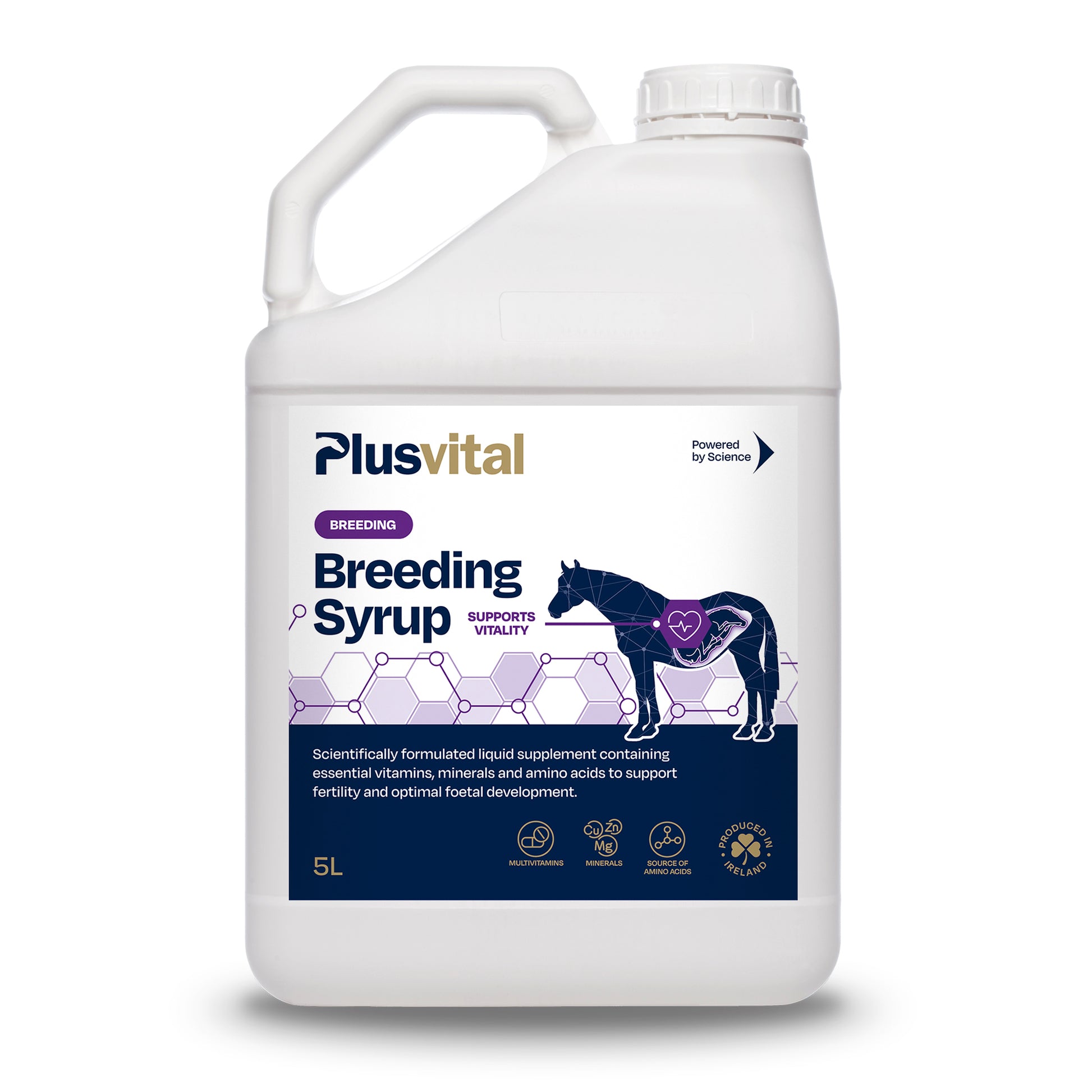
Breeding Syrup
From €18.93
Scientifically formulated liquid supplement containing essential vitamins, minerals and amino acids to support fertility and optimal foetal development.

Carron Oil
From €21.80
A rich source of essential Omega 3 and 6 fatty acids from high quality, cold pressed linseed oil fortified with calcium hydroxide.
Advice
For advice on all aspects of equine nutrition and care please contact Rebecca our Chief Technical Officer.
Rebecca and her team are always on hand and happy to help.
- Rebecca Watson
- Chief Technical Officer
- +353 (0) 86 145 2288
- rebecca.watson@plusvital.com