From

Managing Horses Through a Wet Winter: Winter Horse & Pasture Management Guide
This winter has been particularly wet, leaving many owners dealing with muddy paddocks, saturated ground and limited winter grazing. Heavy rainfall, standing water and poor grass growth make winter horse management challenging, with many fields becoming unsafe for turnout.
During winter, pasture plants enter dormancy and stop producing new growth. At the same time, low temperatures and limited sunlight prevent soils from drying out. Horses turned out on wet ground quickly churn the surface into deep mud, mixing soil, manure and water. Once paddocks reach this stage, recovery can take months and spring grass growth is often replaced by weeds rather than productive pasture.
Ideally, horses should be kept off waterlogged fields. However, for most yards this is not realistic, so the goal becomes protecting horse pasture while maintaining horse welfare.
Start with Good Winter Pasture Management
Effective winter paddock management begins before winter arrives. Healthy pastures tolerate heavy use better than stressed ones. Final topping should allow plants time to recover before dormancy, and local advice should be followed regarding reseeding, fertiliser and weed control. Fields entering winter in good condition will recover faster in spring.
Managing Turnout in Wet Conditions
Careful winter turnout is essential to prevent muddy paddocks:
• Avoid turnout when ground is heavily saturated
• Use shorter turnout periods in small groups
• Rotate grazing areas where possible
This reduces trampling damage while still allowing horses daily movement, which is vital for both physical and mental health.
Feeding Horses in Winter to Protect Grass
Providing hay in the field helps reduce pasture damage. Horses grazing winter fields often pull plants out by the roots rather than eating leaves. Offering forage in multiple small piles away from gates and fences spreads foot traffic and protects high-wear areas.
Use a Sacrifice Paddock
A sacrifice paddock is one of the most effective wet paddock management tools. These areas take the damage so grazing fields can recover. Each horse should ideally have 30–40 m² of space. Where space is limited, rotating horses through the paddock for part of the day still provides turnout while protecting pasture.
Adding suitable footing, such as stone, woodchip, rubber matting or sand, reduces mud, improves safety and prevents injuries around gateways, feeders and water troughs. Daily manure removal also improves hygiene and surface stability.
Transitioning Back to Spring Grazing
When horses have been off grass all winter, grazing should be reintroduced gradually. Begin with short turnout periods and increase slowly while continuing to feed hay. This supports digestive adaptation and reduces the risk of digestive upset.
For horses prone to dietary sensitivity during seasonal changes, Plusvital Neutragast can help support gastric and hindgut health during the transition to spring grass.
Thoughtful winter horse and pasture management protects both paddocks and horses, improving grass recovery and supporting healthier grazing throughout the season ahead.
For practical, science-led winter feeding advice tailored to your horse, contact Rebecca Watson at Plusvital.
Products Featured in this Article
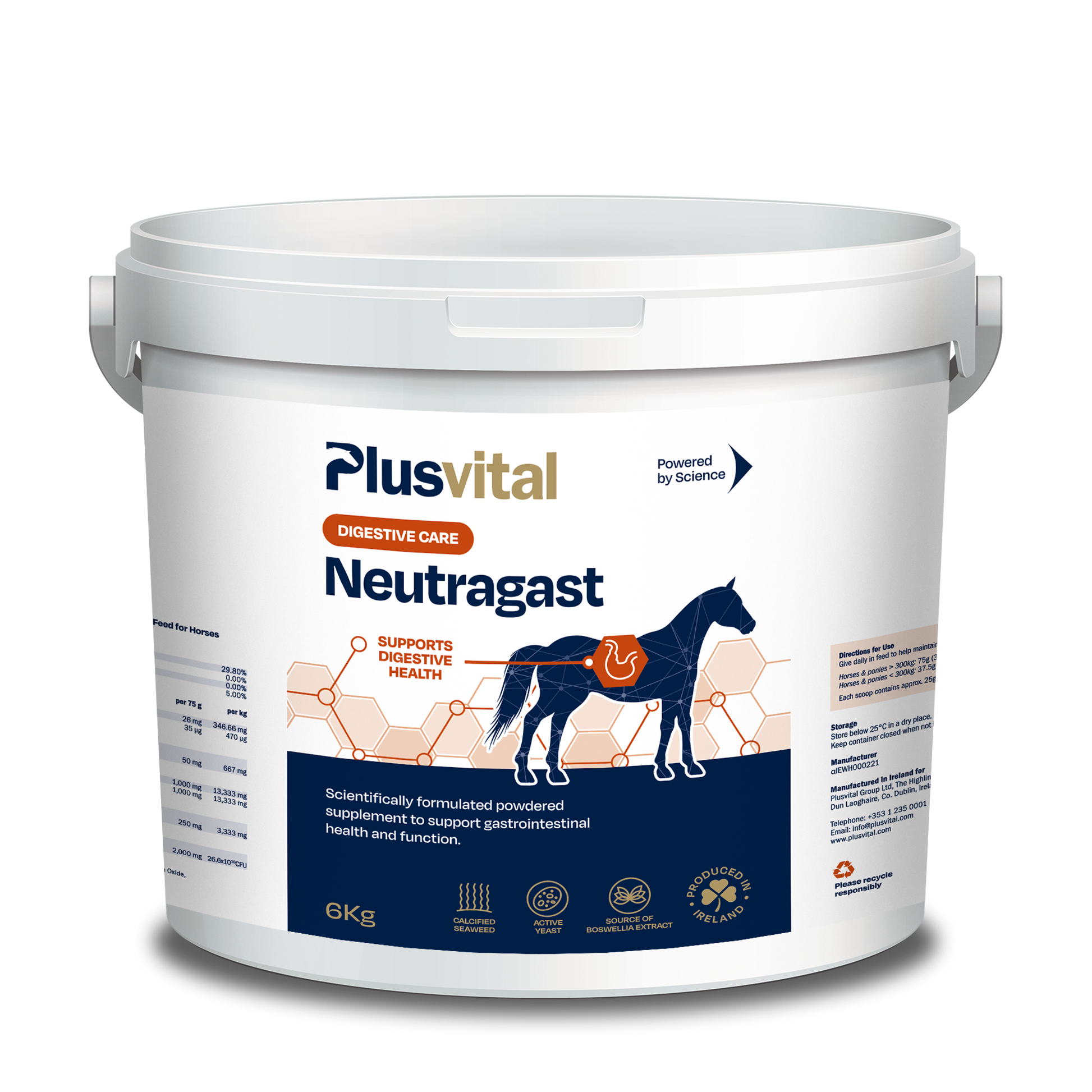
Neutragast
From €30.56
Scientifically formulated powdered supplement to support gastrointestinal health and function.
Advice
For advice on all aspects of equine nutrition and care please contact Rebecca our Chief Technical Officer.
Rebecca and her team are always on hand and happy to help.
- Rebecca Watson
- Chief Technical Officer
- +353 (0) 86 145 2288
- rebecca.watson@plusvital.com